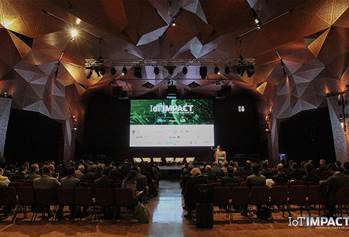


Building out internal AI capabilities was a hot topic for attendees who spoke with techpartner.news at Dicker Data’s TechX 2026 event in Melbourne last week.
The biennial TechX event roadshow, which began this year in mid-August in Perth and travels to Sydney on October 15 after an earlier stop in Brisbane, brought together ICT channel partners with more than 60 vendors.
Speakers including Omdia Chief Analyst – APAC Channels, Mark Iles, spoke about navigating market shifts, building and selling AI, and business growth opportunities, among other topics.
Partners we spoke with in Melbourne talked up their internal capabilities and successes when it came to AI, as well as how this is translating to proof points to talk to customers about.
Sachinn Verma, co-founder and MD of Oreta, said that for internal enablement, the company has a 'centre of excellence' for AI.
This means that every person in the company, whether they're billable or non-billable, now has KPIs related to internal AI use.
"We basically measure them every quarter with their KPIs about a specific task they've done to enable their AI agent," he explained.
"Each employee has an [AI] agent, and each employee has to showcase evidence back to us and that's how their performance is measured."
Creating an internal AI team
Drew Jackson, Subnet's sales and marketing manager, said that his own company's foray into AI and automation started five years ago.
In 2021, the company decided that by 2031, 90% of what it was doing needed to be either self-service or automated.
"With the release of AI and the increase of skills and capability, we've grown our internal automations team now to include agentic engineers, people who have the skill set in building out LLM or SLM models," he shared.
"We're now taking that to our customers and going, 'This is what we're doing internally, this is how we're managing our sales and marketing workflow' or 'We've done this in our operations workflow', so it's really focusing on building out that unique or specific AI and automation practice internally before we tell everyone how great it is."
Jackson admitted that hiring an AI team on top of an automations team has been a "bit of a challenge", however.
Subnet tapped the likes of Gartner for insights to help plan out the different types of roles that an AI team could involve.
"We're from South Australia [and] we're not a large multinational enterprise, so we had to rationalise what we're doing to keep our product in line with what our customers would be looking for and what they'd see good value in," he said.
"We ended up hiring some absolute guns out of Sri Lanka - they've got the skill set, they've got the experience and that's where we're starting now."
Jaspal Sarai, Source Central Partners' co-founder, said that over the past year, his company has spent over $1.5 million overhauling its back end to implement AI throughout the business.
"We will be investing in business process re-engineering, automation, AI and releasing more value-driven solutions [rather] than having an application, hardware, and architectural pursuit to the market," he said.
"That's where most of our investment is going - let's flatten out the whole hierarchy of CRM applications and all the systems. Is the data flowing to an outcome? Is the data going to support an AI agent? And if it is not, then you need to start developing those tools which takes that data out from SQL databases into a flat file and to serve it quickly."
Translating internal build-outs to customer success
Rapid Circle's CCO Paul Tucker said his company is very much ‘customer zero’ in terms of the AI story its telling to customers.
“We're executing on agentifying some of our back-office capability, both in our managed service business, but also in terms of how we operate sales, HR, finance,” he shared.
“The story we're leading with is ‘Come and look at how we're operating our business’, and that's resonating really well because it's proof points not just sales messaging. We've got evidence to prove how that's impacted our business and the costs we've saved.”
Looking externally, Rapid Circle's CTO Gavin Lewis said that the company sees opportunity to generate revenue from building AI solutions that it then sells to customers with the aim of allowing them to reduce their cost of operations and tap into new revenue streams.
"One customer that we've been working with, they've been able to get a return on investment of $19 per every $1 invested in AI recently with new and innovative solutions," he told techpartner.news.
"Another customer is an insurer, and historically insurers have a lot of manual-heavy processes to review customer claim documentation, so [their] revenue is really around how they can settle the claim as quickly as possible, because that expands their margin."
Lewis said that this customer was processing between 20,000 to 30,000 pages of claim documentation a day with humans,
Now, 98% of that is being processed by AI.
"Allowing them to settle out claims significantly faster than before has been really key to this transformation," he said.
"It allows their agents to spend better time on understanding what's important for their customers who are making claims and building that relationship to help them settle claims out faster, generating a much better customer experience."
Telco opportunity lies in existing spend
On a different tack, Jason Hall - GM of Dicker Data’s telco and services business unit - told techpartner.news that the biggest opportunities in telco for partners is in the existing spend.
"The corporate telco spend in Australia is $25 billion a year; this is corporate spend that's already being budgeted for and allocated and we see the biggest opportunity for Dicker Data partners is to start getting a piece of that," he shared.
"How can they get a slice of that telco pie while at the same time growing managed services on top of the devices? All customers have data centre requirements in one way, shape, or form. They all have connectivity to the building requirements or connectivity to the people."
Hall urged partners to think about what customers are doing with regards to NBN and mobility, as "all companies in one way, shape, or form" possess devices that require connectivity.
"How are those devices being connected today? At the end of the day, telco's not overly complex. Just having conversations with their customers around what is the customer doing today will absolutely uncover opportunity [for partners]," he said.
Earlier this year, Dicker Data expanded its telco business unit and UC capability; for partners working closely with Microsoft, the expanded capabilities intend to make it simpler to upgrade Microsoft Teams from a collaboration platform into a complete, business-grade calling solution.
Register here to attend TechX Sydney on 15 October
techpartner.news is the official media partner of Dicker Data TechX 2026.

.jpg&h=142&w=230&c=1&s=1)


.jpg&h=142&w=230&c=1&s=1)