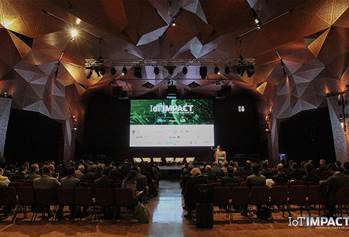


Dicker Data’s TechX 2026 event series hit the sunny shores of Brisbane last week after kicking off in Perth the week prior.
Local technology partners in Brisbane had AI front of mind, sharing with techpartner.news how the technology is affecting recruitment, readiness and return on investment.
For Paul Mangano, MD of Brisbane-based Mangano IT, looking ahead to the next three to five years and the capabilities that his MSP needs for the future means assessing what internal adoption of AI will result in in terms of how he grows his team.
"If we think about any senior technician or senior architect, they were once a junior and they've grown over time; now, unless we have the ability to grow our junior people up over time, because we're using AI or alternatives in that junior space, then we won't have any juniors, which means we won't have any senior, educated and experienced resources at the top end," he explained.
"We still engage with a lot of young people and try to get them into our business - sometimes not super exciting jobs - but it's about finding the curious people amongst the bunch, bringing them along for the ride and making sure that they know what they're doing with AI tools."
Mangano said that it isn't just seniority discussions that AI is having an impact on, but its also creating a broader discussion on what kinds of roles MSPs should hunt for moving forward.
"We need business analysts to have business conversations about solving business problems with our customers - to understand what the business problem is to see if we can apply AI to resolving their issues, to improving their profitability, to ensure that they can gain from the spend that's associated with AI, particularly as the cost of AI will start to increase shortly," he told techpartner.news.
As for how those AI and automation efforts are coming along internally, Mangano shared that the company has spent "a lot of time and effort" around building "high-end automation".
"Everything from bespoke customer onboarding from beginning to end, integrating with employment platforms for our customers, right through to the delivery and communication to the end customer or the end user of a new account," he stated.
"AI is then building out MCP connectors to data sources, whether it's your PSA or your RMM, and then starting to actually delve into AI-based queries on that data set. As MSPs, we've got huge amounts of data in our organisations, and for a long time it's genuinely been untapped. Building these MCPs will allow us to actually interrogate this data in ways we never have done before."
First Nations representation needs to improve
Another technology partner thinking about the current makeup of teams is Beau Hodge, chief executive of First Nations-focused tech provider Baidam.
Hodge said while current First Nations representation in the local cyber landscape is "quite low", everyone can play a part in supporting pathways or enablement opportunities to bolster that.
"We now have six perpetual lifetime scholarships nationally and that helps with lowering one barrier for that university student to be able to complete a cyber degree," he said.
"There are alternate pathways, and I think that's the opportunity - to say there are different pathways into the industry, having that exposure and opportunity to partake in some of those courses. We [also] have a partnership with Deadly Coders who do an eight-week boot camp around cyber and has pathways into customers and into industry."
Those pathways tie in to the broader discussion happening in the Australian technology industry over the past few years around professionalisation in the cyber industry, an effort currently being spearheaded by the pilot of the voluntary national Cyber Security Professionalisation Scheme.
Hodge said that while he thinks professionalisation is "an amazing thing", and that everyone within the industry is broadly very professional, what he wouldn't want it to be is one where certain certifications or credentials end up being an inhibitor for people coming into the industry.
"A big focus of what we do is enabling young First Nation guys and girls into the industry, and if that bar of having to have a university degree or certain certifications is a definite requirement, then we're gonna miss out on amazing First Nations and non-First Nations talent," he said.
"An example of that for us is we had a young girl, Candice Bowditch, who had gone through RMIT and had every skill set that was needed. Baidam funded a SANS scholarship for her to be able to have that tick box of a SANS certification that supported her get into that first role.
"But that's a $15,000 commitment, which isn't always able to be funded by people in the industry, so I think professionalisation's a great thing because we are trusted by customers in their environment and to support them and to add value; I just wouldn't want it to go to the point where that limits the pathways into the industry."
A range of AI readiness
Amir Kalil, Dicker Data's senior business manager and AI practice lead, said he's seeing a mixed bag in the market when it comes to partners' readiness of adopting AI.
While there's "a lot of partners" talking to the distributor about possible use cases before finding out that their data may not be up to scratch to implement AI yet, others have already established a data readiness practice and are not only "making good money off" of AI services, but they also have hired AI engineers who are building applications and deploying it into production.
"Every organisation in Australia will need to get on this AI journey at some point. If you haven't started yet, don't worry. Just get started now," he advised partners, echoing one of the messages from Ben Johnson, Dicker Data's GM of marketing and strategy for ANZ, in his keynote.
"Start playing with it, and start looking at your own organisations as well, because that is the best way for you to learn; you will run into these roadblocks that your customers will run into, and once you figure out how to overcome these roadblocks, then you can take your learnings to your customers."
As to what the most common AI use cases are that he's seeing partners implement, Kalil said a lot of it is still back office tasks - automated invoice processing, automated quote generation and email triage.
"We're getting a lot of questions around computer vision - things like theft detection models in retail or, antisocial behaviour detection in different environments," he explained.
"Even before the use cases, what I'd say is right now the opportunity is really in the data - it's getting the organisation's data ready first, so that when you do build those use cases, you're building it on top of data that is classified, accurate and that you can essentially grow with."
Moving beyond turning on licences
Justin Maskey, CTO of Sunshine Coast-based Telstra partner ENTAG, said one key enabler for success for technology partners when it comes to AI is moving beyond just turning licences for customers, but instead supporting them on their journey to ensure that they have secure foundations in place as well as maximising the investment they're making.
"Investment in AI is an investment no different to investment in any other technology," he told techpartner.news.
"I think you need to understand what business problem is being solved by the turning on of that license and then measure it like any other investment - [what's the] ROI, what's the total cost of ownership, and then the education and adoption piece is a key part of that.
"We wouldn't turn on an ERP and not train an accounts payable clerk on how to generate invoices; it's the same with AI."
Sandeep Sharma, regional sales manager for NSW, ACT, QLD, NT and PNG at Dicker Data, shared similar thoughts, stating that the commercial pressure on partners currently is forcing them to think about how can they grow their revenue in a profitable way.
"How do they monetise AI? How can they be relevant to their partners on the AI journey? How can they increase their managed services and increase their profitability?" he said.
"The partners are feeling a pinch when it comes to price increases; the price of all IT equipment has gone up, and that's continuing to go up, [so] how they can still ensure that their end users have got budgets [and] that they can help and fulfill their needs."



.jpg&h=142&w=230&c=1&s=1)

.jpg&h=142&w=230&c=1&s=1)