

In summary
- Gartner forecasts that by the end of 2030, more than 10 billion autonomous agents will place significant strain on public services.
- By 2030, 80% of organisations with public-facing AI are expected to have experienced a cost exhaustion attack designed to inflate operational costs.
- By 2030, Gartner predicts 80% of the Global 500 will contractually designate their CIO or chief AI officer as the Evidence Custodian for AI accountability.
Gartner has released its top strategic technology predictions for 2027 and beyond, forecasting sweeping AI-driven changes to public services, the software lifecycle, energy markets and enterprise governance.
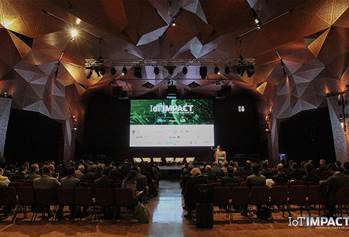
The predictions were presented by Daryl Plummer, distinguished VP analyst and Gartner Fellow, at Gartner IT Symposium/Xpo on the Gold Coast.
"Many of the systems we take for granted today, from public services to software, energy and workforce models, will be fundamentally transformed by AI over the next decade," Plummer said.
"The most successful organisations will be those that balance innovation with responsibility, building the capabilities needed to manage both the opportunities and the unintended consequences of an AI-driven world."
The ten predictions are grouped under three themes: robots everywhere, cost to value, and unknown unknowns.
Robots everywhere
Gartner predicts that by the end of 2030, more than 10 billion autonomous agents created by people, companies and governments will place significant strain on public services.
Agentic AI, the analyst firm said, will enable autonomous agents to identify eligibility and submit requests on behalf of users with minimal human involvement, driving a surge in applications, claims and transactions that government systems are not yet equipped to handle.
By 2030, Gartner also predicts 80% of front-line workers employed by international companies will be assisted by physical AI systems - robots, drones, autonomous vehicles and other embodied systems that sense and interact with their surroundings.
For partners selling into manufacturing, logistics and utilities, Gartner recommends organisations take a safety-first approach, invest in scalable platforms and build governance frameworks to manage physical AI deployments.
Unknown unknowns
A new cybersecurity threat category is flagged in the predictions: by 2030, Gartner expects 80% of organisations with public-facing AI will have experienced a cost exhaustion attack - where malicious actors deliberately drive excessive AI usage to inflate operational costs.
Gartner recommends organisations treat token consumption as both a cost management and a security concern, and extend monitoring across all AI technologies.
Also by 2029, Gartner predicts 80% of new applications will be intentionally disposable - built for use cases lasting less than a year - as AI makes development accessible enough for non-technical staff to create temporary tools. This creates governance, compliance and records management challenges for IT teams and their partners.
By 2030, Gartner predicts $10 trillion in enterprise-owned energy assets will make Global 2000 firms unexpected power providers, selling electricity back to grids and AI data centres.
The firm also predicts insurers - not regulators - will increasingly drive AI governance, as strict underwriting standards for AI liability insurance push organisations to embed operational controls directly into AI systems.
By 2029, 25% of Global 500 companies will continuously innovate componentised AI-powered offerings, Gartner said, creating a competitive position that makes fast-follower strategies increasingly unviable.
Cost to value
On the cost side, Gartner predicts that by 2029, 60% of organisations deploying AI will establish a dedicated function responsible for mapping AI total cost to value or profit - a direct response to escalating token costs that are difficult to tie to business outcomes.
By 2028, 60% of Global 500 companies are expected to embed AI FinOps controls at inference, shifting cost governance from retrospective reporting to real-time optimisation. Gartner recommends runtime cost controls, inference-path telemetry and making cost governance a core requirement of AI platforms.
Finally, by 2030, Gartner predicts 80% of the Global 500 will contractually designate their CIO or chief AI officer as the "Evidence Custodian" responsible for AI accountability - a signal that technology leaders will bear growing formal responsibility for how AI systems behave across the organisation.