
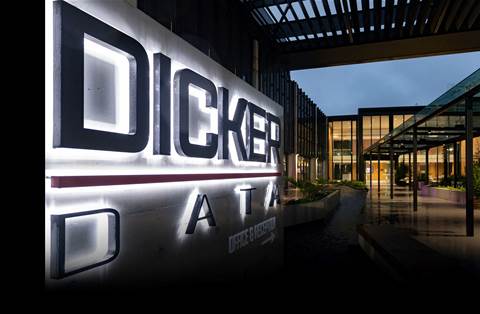

Dicker Data has released its financial results for the full financial year ended 31 December 2025 (FY25), reporting gross revenue of $3.9 billion, up by $503 million or 14.9% when compared to FY24, driven by growth across all key segments.
This result was underpinned by continued growth in the company’s subscription and recurring revenues, rising 22.4%, as well as market share gains that were experienced broadly across the company’s vendor portfolio.
Full year gross profit also increased by 7.2% to $347.7 million, delivering expected gross margin (as measured against gross revenue) of 9% lower than the prior year as a consequence of a change in customer mix with increased contribution from the company’s enterprise customers.
Net operating profit before tax was $124.7 million, $11.5 million higher and up 10.1% on FY24.
Salary costs increased 8.6% to $159.7 million, driven by a combination of increased headcount - now sitting at 942 - plus higher commissions associated with strong performance and increased employee provisions, but salary costs as a proportion of gross revenue decreased to 4.1%.
Software leads growth
While the company delivered "broad‑based growth" across all key segments, software led the charge, increasing 21% year on year, now over $1 billion in gross sales and representing approximately 30% of revenue.
There was also strong growth in end point solutions of 18.9% and access and surveillance of 16%, with the former segment also delivering over $1 billion in gross sales.
Advanced solutions grew 11.8% on the prior corresponding period, while retail and professional audio-visual recorded growth of 1.8% and 4.3% respectively.
Growth across these areas reflects the increasingly non‑discretionary nature of software and cybersecurity investment as customers respond to regulatory requirements, rising threat complexity and the operational risks associated with data breaches and service disruption, according to the company.
Demand for AI PCs accelerating
AI‑enabled devices also gained "significant traction" during the year, according to Dicker Data, contributing to a changing mix within endpoint solutions as partners prepared customers for the Windows 10 end‑of‑support refresh cycle, according to the company.
Demand for AI‑capable PCs accelerated ahead of broader industry expectations, the company claimed, supported by increased vendor investment and growing awareness of the productivity and security benefits of on‑device AI and modern workplace technologies.
This in turn helped to reinforce the company’s positioning in next‑generation endpoint solutions as customers progressed their device refresh plans.
Dicker Data also progressed several large‑scale AI initiatives during the year, including supporting critical infrastructure for Australia’s first sovereign AI Factory and launching a joint AI proof‑of‑concept environment in partnership with vendors.
Improving SMB environment
Dicker Data said the SMB operating environment improved during FY25 as the technology sector across Australia and New Zealand began to stabilise following the prolonged period of macroeconomic pressure experienced in prior years.
A more constructive operating environment for the company compared to FY24, with enterprise and mid‑market segments driving increased activity, was attributed to "organisations increasingly focused on productivity, optimisation initiatives and technology refresh activity".
Dicker Data also said that it continued to prioritise deeper engagement with enterprise and large‑scale partners, who demonstrated "greater resilience in investment cycles".
Increased demand from these customers helped support higher‑value infrastructure and software transactions, partially offsetting ongoing softness in the smaller end of the market.
A "positive outlook" for 2026
Dicker Data executive chair Fiona Brown said FY25 marked a return to a more constructive operating environment across Australia and New Zealand, following a prolonged period of macroeconomic pressure.
"Against this backdrop, the Board was pleased with the Company’s performance, which reflected disciplined execution in a stabilising market," she said.
"Growth during the year was broad‑based across the portfolio, with strong contributions from software, advanced solutions, end point devices and enterprise infrastructure, alongside improving momentum in artificial intelligence‑related activity. Importantly, this performance was delivered while maintaining margin discipline and continuing to invest in the systems and capabilities required to support long‑term scale."
Brown said that as technology adoption continues to evolve, Dicker Data is seeing customers and partners move from early AI experimentation toward more structured implementation.
"The Company enters the next phase of growth with a comprehensive infrastructure and software portfolio, deep vendor relationships and a proven ability to execute at scale," she said.
"The Board remains confident in the Company’s positioning as spending on AI, data infrastructure, cybersecurity and software accelerates.”
Dicker Data executive director and COO Vlad Mitnovetski said the team performed exceptionally well in FY25 by maximising the available opportunities and supporting partners.
"Software led our growth in FY25, followed by endpoint solutions as a result of the anticipated Windows 10 Refresh," he explained.
"We enter 2026 with a positive outlook, particularly as AI and related opportunities continue to materialise and SMB technology spend recovers.”



.jpg&h=142&w=230&c=1&s=1)
.jpg&h=142&w=230&c=1&s=1)