


In summary
- CyberPath has released the first version of its Occupations Framework to deliver a clear national map of cyber jobs and roles.
- The Framework introduces ten Functional Domains that group related work by shared purpose rather than relying on job titles alone.
- However, these reflect cyber security specialist domain areas rather than generalists.
CyberPath, the pilot program designed to professionalise Australia’s cyber security workforce, has released the first version of its Occupations Framework, designed to deliver a clear national map of cyber jobs and roles.
Rather than relying on job titles alone, the Cyberpath Framework has introduced Functional Domains, grouping together related types of work based on shared purpose, functional alignment, or the organisation’s underlying capability requirements.
Using functional domains as an organising structure aims to create a stable ontology for CyberPath that mitigates the variability of job titles used across organisations, as well as provide scalability of the solution that’s reflective of the Australian organisation context which is fragmented in terms of sizes and dominated by SMBs.
It also intends to serve as the practical guidance on how different cyber capabilities can be considered as a holistic and integrated view of end-to-end capabilities required for a defence in depth approach to cyber security.
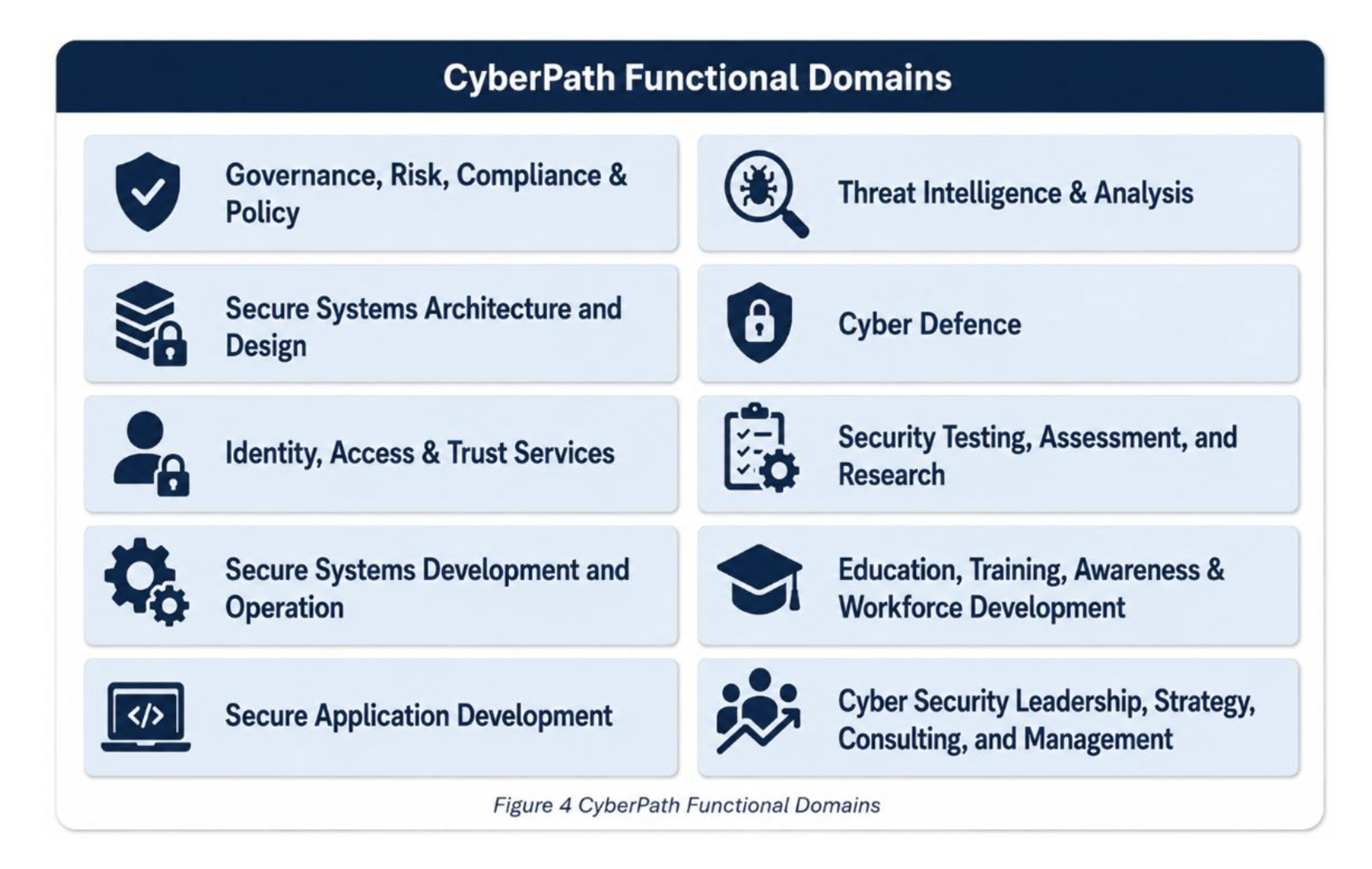
The ten CyberPath Functional Domains reflect cyber security specialist domain areas and do not reflect cyber security generalists or the broader workforce base that may handle some level of cyber accountabilities, responsibilities or more generally interact with the cyber team, however.
The Occupations Framework sits within the CyberPath Ontology, connecting occupations and roles with the capabilities people need, how those capabilities can be recognised, and the pathways people can take into and through the cyber profession, the Framework stated,
What roles should and should not be within scope for professionalisation, how recognition of prior learning, experience and non-traditional pathways will be recognised fairly; and how pilot success will be measured were all areas raised at town hall consultation sessions earlier in the year about CyberPath.
CyberPath has opened a public consultation for all interested parties to contribute feedback on the CyberPath Capability Framework Discussion Paper before the CyberPath Framework and pilot design is finalised.
The consultation closes on 27 September 2026.


.jpg&h=142&w=230&c=1&s=1)
.jpg&h=142&w=230&c=1&s=1)

.jpg&h=142&w=230&c=1&s=1)