.jpg&w=480&c=0&s=1)

SCX.ai, a full-stack AI provider delivering local AI inference and model hosting, has launched what it says is Australia’s first 'sovereign' AI infrastructure node.
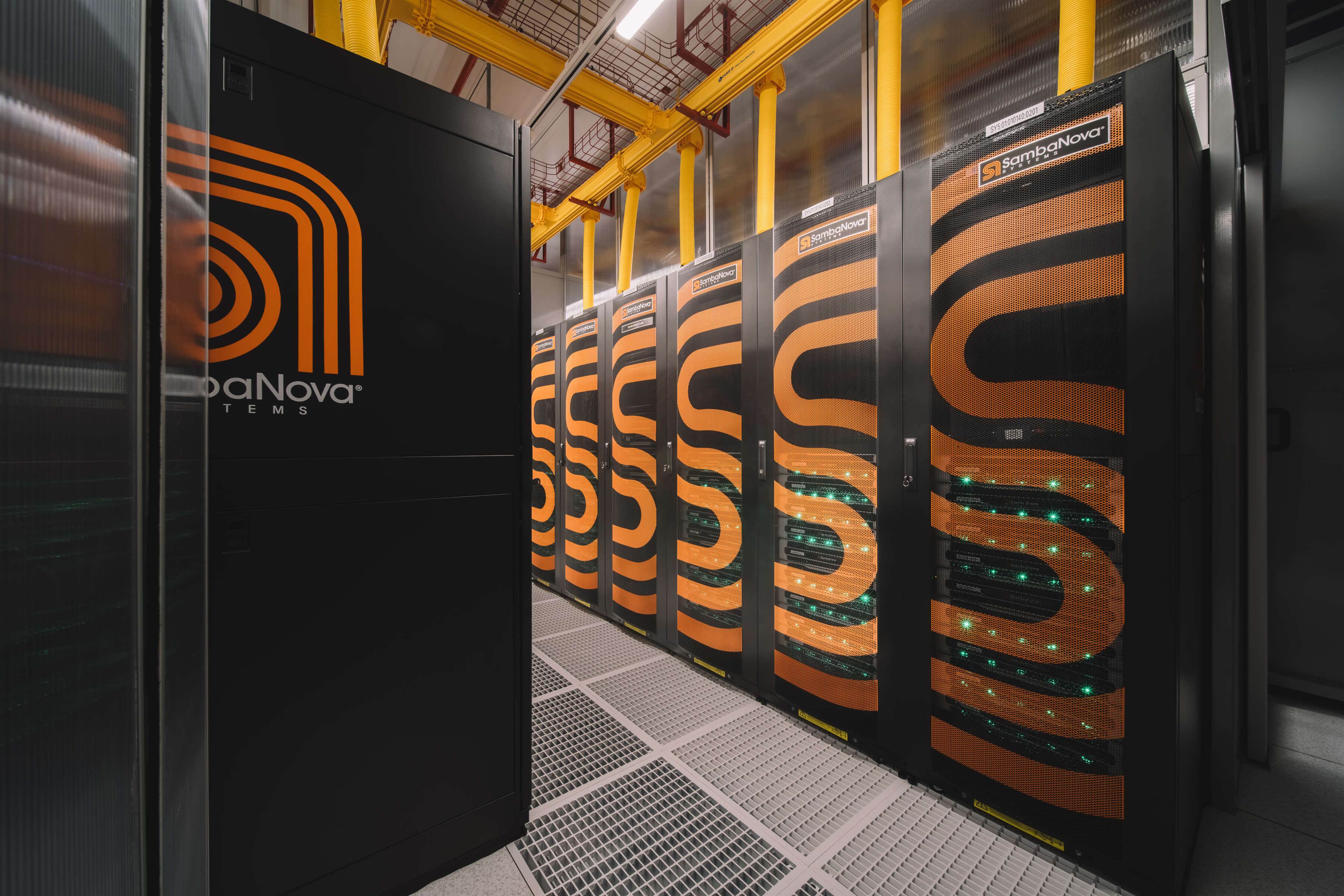
The node, deployed by SCX.ai at Equinix's SY5 IBX data centre, claims to deliver AI inferencing ten times more efficient than traditional GPU-based systems while also eliminating the need for water cooling.
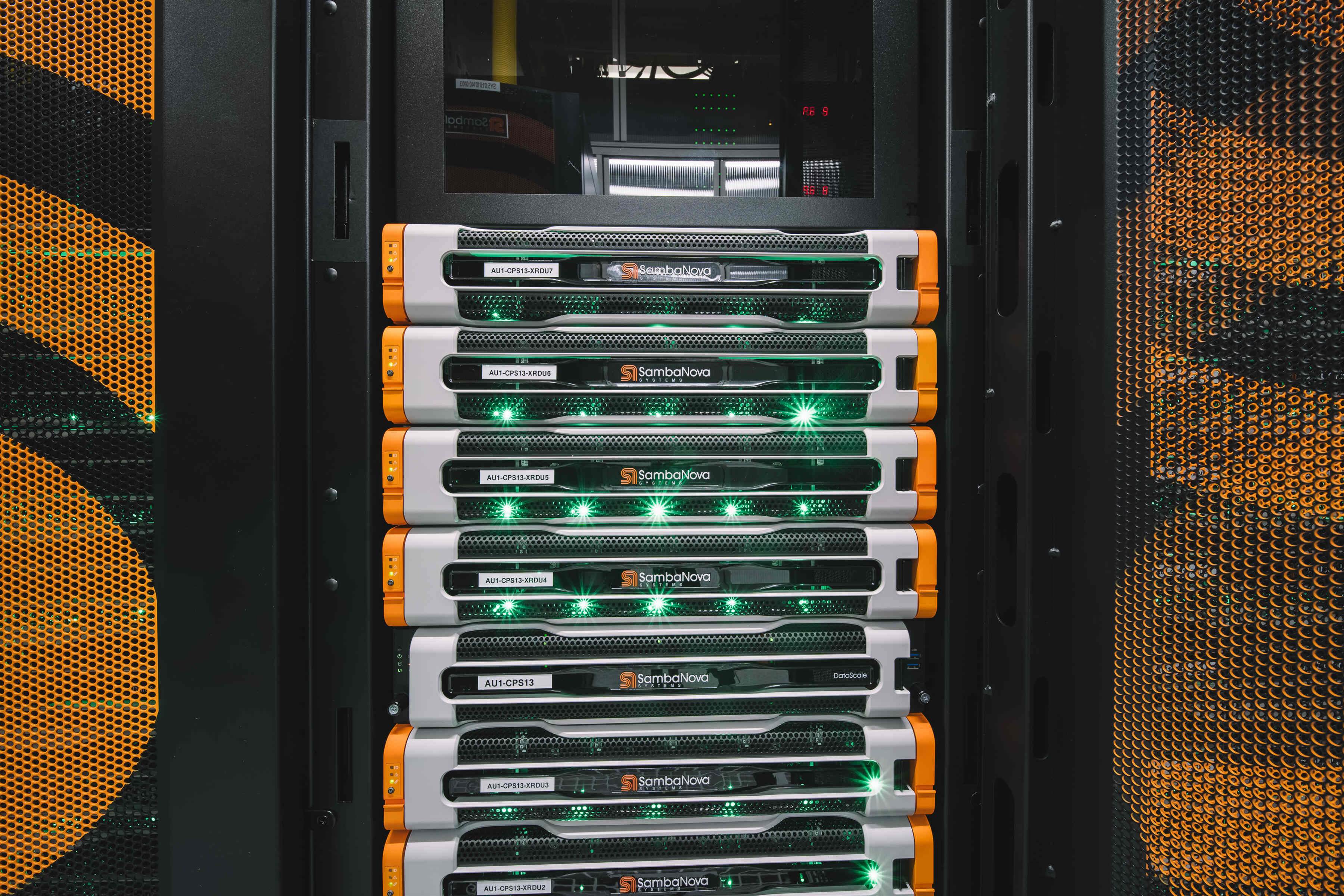
The node is built on Application-Specific Integrated Circuit (ASIC)-accelerated architecture through SCX.ai's partnership with SambaNova Systems, delivering “substantially higher inference throughput per watt than GPU-based platforms” and allowing “sustained, production-grade AI workloads at density levels traditional data centres cannot match”, according to the company.
Alongside customer AI applications, the infrastructure will support Project MAGPiE, SCX.ai's Australian-focused large language model designed to better understand Australian context, terminology and cultural nuances when compared to offshore alternatives.
IT infrastructure provider Servers Australia is delivering local technical support and managed services for the deployment, providing SCX.ai with access to the company’s private Australian network as well as a team of engineers.
“This platform proves that you can deliver high-performance, onshore AI with real efficiency and data control. It’s the kind of innovation that strengthens our tech sovereignty while driving smarter, more sustainable outcomes,” said Rick Swancott, Servers Australia’s GM of sales.
The Sydney node is the first in a planned national network, with additional locations scheduled for deployment throughout 2026 to expand capacity and reduce latency for regional users.
Strong interest from government
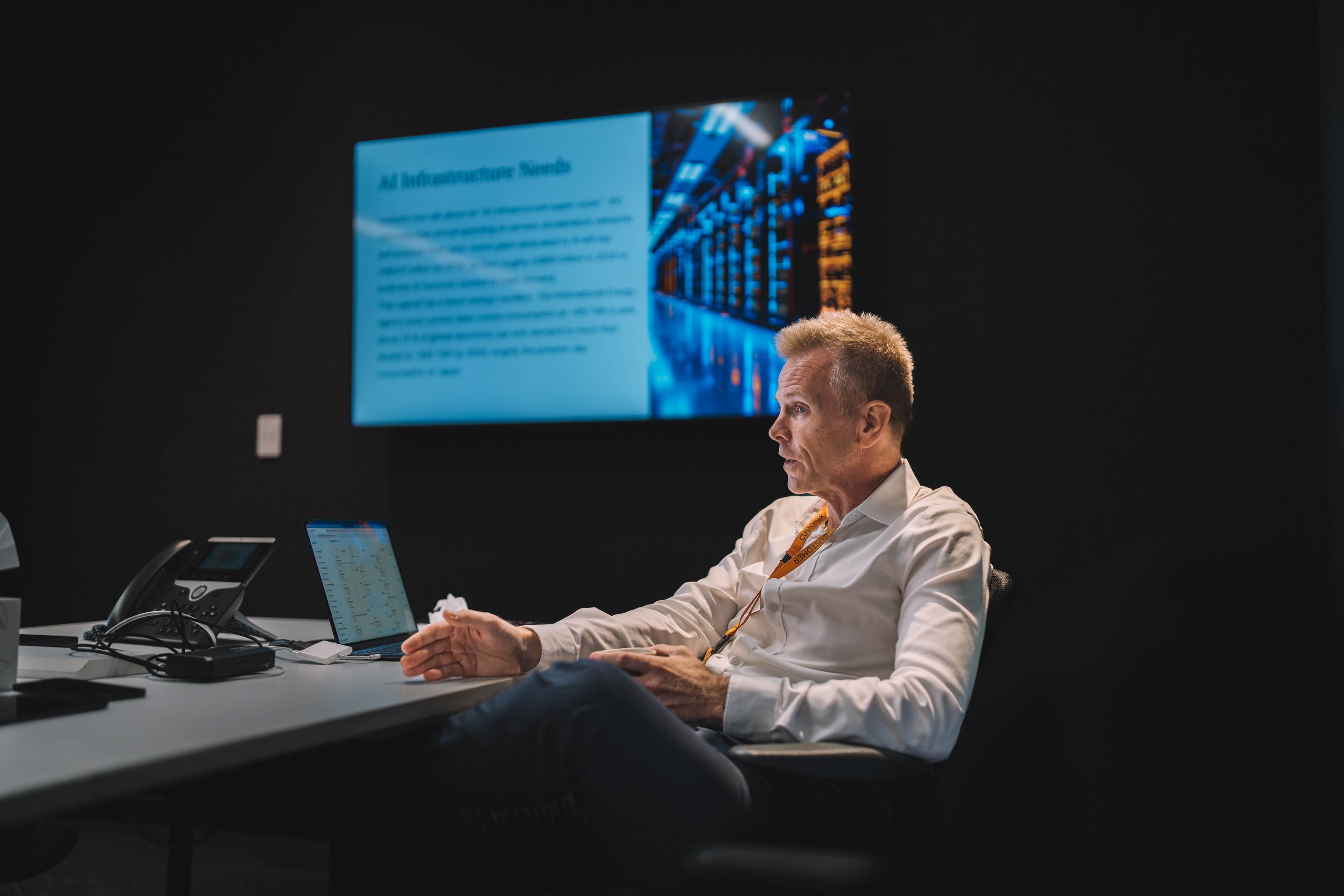
SCX.ai CEO and co-founder David Keane said that the company is aiming to build the capacity that will ultimately create new companies in Australia, stating that he sees 2026 as the "turning point" where companies progress from “just dabbling in AI” to deploying both traditional and agentic AI at scale.
“What we're already seeing is new companies popping up that can use our capacity to build their own AI platforms, and those companies now don't have to give their money to some overseas provider to build their application,” he explained.
“They can keep the money in-country, and they can also get faster and more secure access to these AI tokens.”
Already having presold close to a third of the capacity of the system, customers both domestic and international are already talking to SCX.ai about buying more capacity, Keane said.
"We've [also] had quite a few government departments through - Department for Energy, Department of Defence - [so] there's a lot of interest from the government sector,” SCX.ai CMO Sam Elliott told techpartner.news.
“On top of the sovereignty [need], throughout the government at the moment energy is such a big thing and meeting climate targets are massive, which means [government] have probably been the most enthusiastic.”
The company isn’t worried about a potential change of government in the future stymying demand or constricting growth, however, a risk perhaps best exemplified by the Liberals’ abandonment of the party’s previously stated commitment to reach net zero emissions by 2050.
“Regardless of who's in charge of the government, energy is going to be an issue,” Elliott stated.
“The simple unit economics of our solution mean that whoever the government is, we're going to be competitive, because we use less energy. If the party changes and Net Zero goes out the window and prices increase or whatever it's going to be, we're still going to be in an advantageous position."
Focusing not just on the hardware required to build AI tokens, SCX.ai also builds and operates its own proprietary software layer, plus provides access to open-source and proprietary AI models, including from the likes of Meta, OpenAI and DeepSeek, the latter of which has faced bans from both the Taiwanese and Australian governments.
Elliott said that both the racks the company uses as well as the chip itself can run multiple models simultaneously, and due to the models being compiled on SCX’s server, nothing ever leaves there.
“They're open-source models, so if you're running DeepSeek, you can run DeepSeek’s latest model, but as opposed to using it publicly, it's staying with us. That's the benefit of the sovereign component," he said.
“In many business instances, when these models move to the next version – GPT3 to GPT4 to GPT5, for example - those big companies tend to deprecate the old model. That's caused massive issues in the industry in the past.
“One of the advantages to our system is that [because] we compile these models on our system, our customers can be sure that those models are going to continue to work in perpetuity as long as they need them. If they use a public interface with those models, they can't be guaranteed that.”
“We need skin in the game”
This isn’t Keane’s first venture into entrepreneurship – he ran bigtincan, a utility software provider for mobile platforms, for 14 years after launching it in 2011.
The company, and Keane, subsequently relocated to the USA, going on to list on the ASX in 2017 and acquiring a total of 14 companies before themselves being acquired by Vector Capital and merging with Showpad last year with the aim of becoming the market leader for AI-native revenue effectiveness solutions specifically built for field selling-centric organisations.
With customers including the likes of Citibank, Nike, Red Bull, Google and Apple, Keane said that running bigtincan was an “amazing experience” where he “learned a lot”.
“What we saw happening was AI was becoming part of every piece of software and we also saw some of our customers coming to us and saying, ‘Hey, we know you're selling this cool software, but actually we can probably build it ourselves now with AI’,” he told techpartner.news.
“We were thinking about the future of that company and we felt that the best place for that company was to be sold. Because we'd sold AI to some of those amazing customers, I realised how important AI was going to be.
“I'd looked at Australia and thought ‘there's a huge gap, no one's doing this in Australia yet – and we must have [sovereign AI]. It's an essential. It isn't an optional extra’.”
That thought led to Keane moving back to Sydney and setting up SCX.ai in October of last year, with the view of figuring out how he could build a successful AI factory for Australia.
“We looked at all the different chip providers and service providers and different offerings all over the world and we worked out that the only way to build a successful and viable business was to approach this with a focus on the AI inferencing, and to use these new chips, because the older chip approach was so expensive and uses so much energy that we thought we wouldn't be able to make it work commercially, [plus] the environmental impact was significant,” he explained.
“The idea was [to] come back to Australia and start something that is focused on bringing the very best AI to Australians in a way that we can control what happens to the information, [have] complete providence of where it goes, how it's used, etc, but do it in a way that was also efficient, so we could offer it at the right price when we're selling it, but also with the minimum possible energy impacts.
“If we didn't do it, the risk is that we just become a taker from the USA and China. We need to have some skin in the game.”
Since then, the team has grown to around 20 people spread across a number of different disciplines, and while the business has been self-funded to date with support from vendors and partners, and isn’t looking to raise capital “at this stage”, Keane said that company does see the chance to “bring AI opportunities to all Australians over time”, however that may materialise.
“A genuine first for Australia”
Dr Joseph Sweeney, a future of work advisor from analyst firm IBRS, described the launch of SCX.ai’s node as “symbolically significant, but architecturally modest”.
“SCX.ai has deployed SambaNova ASIC-based inferencing in an Equinix (US-owned) facility, which is data-residency compliance, not true sovereign infrastructure,” he stated.
“The primary challenge with leveraging US subsidiary-owned infrastructure is that the entire environment is subject to the CLOUD Act: jurisdictional sovereignty is lost, data sovereignty is an illusion, and access to services may be terminated at the discretion of foreign authorities.
“This is not a theoretical consideration. There have been multiple examples in the past year of US firms exercising "kill switches" on infrastructure that was previously considered sovereign: from universities (China) to allied nation's military forces (Israel), as well as data capture. Digital and AI sovereignty is not about where a computer or information is located. It's about who has ultimate control."
Despite this, Sweeney said that SCX.ai's ASIC-based inferencing at production scale is “a genuine first for Australia, and that matters”.
“It is not just about speed, but the total cost of running AI at scale, especially as agentic services are becoming embedded into Australian businesses' workflows,” he said.
"We do feel that Dr Sweeney has misconstrued the US Cloud Act," SCX said in a statement to techpartner.news.
"The US Cloud Act is a data-production law, not a physical infrastructure control law. While the 'kill switches' he talks about have been used, they were activated through OFAC sanctions or Presidential Executive Orders, not the Cloud Act," the statement continued.
"On top of that, SCX is providing an inferencing cloud; we're not a data storage company. We have no prompt caching and no input or output retention. We also don't train on our customer's data. The only data that we keep on our sovereign inferencing cloud is the open weight models, which are freely available to anyone.
"Our resilience against the US Cloud Act is actually something we see as one of our greatest advantages over the large American providers like Amazon, Google, and Microsoft."
Sweeney said that while SCX’s approach is replicable – that of a systems integrator deploying a vendor partnership within existing colocation, something NEXTDC, Macquarie and AirTrunk are already doing at “far greater scale and have the capital and relationships to follow”, with the IBRS advisor expecting at least two comparable deployments from larger local operators before year-end - smaller players have a history of providing "exceptional service" to their clients.
“IBRS tracks project completion, costs and service delivery satisfaction levels, and generally finds that niche Australian vendors outperform the giants in all areas,” he told techpartner.news.
“Why? These local players have a lot more skin in the game for each client. What they lack in breadth, they make up for in client attention.”



.jpg&h=142&w=230&c=1&s=1)

.jpeg&h=142&w=230&c=1&s=1)