

When an 86-year-old veteran rang Uniting NSW.ACT to cancel a home-care visit, he did not get a person.
He got “Jeanie”, an AI voice agent built on Webex Contact Center.
The call did not go well. He didn’t have his customer ID number, Jeanie kept insisting on it, and he eventually hung up.
After that incident was raised with Craig Mendel, manager, IT customer experience at Uniting NSW.ACT, the flow was changed so callers who did not know their ID would be escalated to a human.
The veteran’s own solution was to put the ID in his phone so he would have it ready next time.
The idea of deploying AI systems to talk with elderly people might raise the eyebrows of anyone who experienced the early days of poorly implemented Interactive Voice Response (IVR) systems that relied on rigid menus and constrained speech commands – and were notorious for frustrating users.
But some organisations are putting AI in front of elderly people.
For example, The Guardian reported in October 2025 that St Vincent’s was trialling use of an AI voice bot to make daily check-in calls with elderly customers. It quoted a 79-year-old lady speaking positively about the experience, saying the bot asked how she was and if she’d had a chance to step outside that day.
That’s in addition to use of the technology globally in retail, hospitality, finance and other sectors, for everything from taking calls about tickets and food orders to employees' queries about work schedules.
Some of the companies selling the technology tout their voice agents' ability to understand many languages and accents and sound “lifelike”.
There are potential savings and customer service benefits.
But there is also the risk that poorly implemented AI misunderstands us, or worse, make catastrophic mistakes.
So how far are organisations able to go with AI voice agents?
Ring fencing the use-case
Uniting NSW.ACT has tens of thousands of clients ringing each month, including home care customers wanting to make, change or cancel home-care appointments.
Before Jeanie started taking calls, callers regularly waited in queues for 15 minutes, a conversation to cancel an appointment could take 15 minutes, and calls after business hours diverted to voicemail.
Mendel’s team used Cisco topic analytics to quantify how much of the contact-centre load was swallowed by routine home-care appointment cancellations. The problem statement it took to Cisco was ring-fenced to streamlining those cancellation calls.
Uniting NSW.ACT wanted clients to reach it when it suited them and without waiting in a queue for straightforward transactions.
It worked with Optus and Cisco to “design a roadmap”, and a proof of concept was created, initially tested by employees.
Callers would hit Jeanie first. The bot would ask some questions, process the cancellation, trigger an SMS confirmation and push a call summary into a CRM. If the discussion became too complex or the caller asked for a human, the call and transcript would be handed to a human.
The initial live test was with about a dozen clients aged 66 to 91. Mendel sat in on many of the calls, via a separate Teams call with the clients, watching how quickly they adapted (or not) to talking to AI instead of a human.
“With the customer demographic that we have, it's a fairly bold way to interact with your customers initially,” Mendel said, which is why it was important to take “customers on the journey with us”.
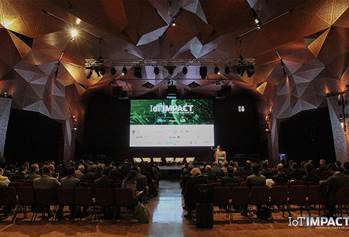
“They started to build this relationship with Jeanie, the AI agent, as if it was a real person,” he claimed, speaking on stage to media and analysts at the Cisco Live Melbourne 2025 conference last month.
If Jeanie spoke too fast or was unclear, clients told her to slow down. Jeanie apologised and repeated. Post-test surveys produced a 4.06 out of five score for willingness to use an AI agent again to cancel appointments.
AI agents were also used to test Jeanie under load. Each was given a different persona – one was happy, one argumentative, and some were tasked with trying to break Jeanie’s logic.
“It must be the strangest thing that I've ever had to listen to – an AI agent talking to an AI agent.”
The system went live into production two weeks before Cisco Live Melbourne 2025. In the first week, Uniting NSW.ACT recorded around 500 interactions with Jeanie; about half were handled completely by AI.
The rest were escalated to humans – either because that’s what the caller asked for, or because their questions were too complex for Jeanie.
The average “handle time” for the calls was three to three-and-a-half minutes, without wait times.
Mendel spent “quite a bit of time” reading the call transcripts. One call involved a client who called to cancel a visit because they were going to see a brother with cancer. Jeanie responded with sympathy, focused on performing the cancellation quickly, and then wished the caller well.
Uniting NSW.ACT provided daily feedback to Cisco, which Mendel said was “consistently improving the experience.”
Mendel said Uniting NSW.ACT had expanded Jeanie’s role so eligible callers could find out which support worker was coming, and confirm what appointment type and time they had booked, up to 30 days ahead.
His team planned to create a “well-being matrix” to flag concerning reasons for cancellations and trigger proactive welfare checks.
Mendel acknowledged “really poor stigma around AI” among contact-centre staff, which he saw as being fuelled by media “hyping it up” that AI would replace contact centers.
“The story is that we’re just going to partner with AI and technology to improve the overall experience and make the simple tasks go away and make them more complex task-focused” he said.
He framed his numbers in terms of capacity, not redundancies: he estimated the work done in this “subset” had been equivalent to about 5.5 full-time staff, and the capacity created over time would mean employees working at “120 per cent” would work “at 100%” and be more focussed on complex tasks.
Mendel saw other potential opportunities to use AI voice agents, including on Uniting NSW.ACT’s IT help desk.
“For example, we receive up to nearly 1,000 calls a month to do password resets in our IT service desk. We figured out that’s approximately $25 a call,” he said.
“So here's another really good opportunity to use data to ring-fence a specific use case, to be able to test an AI agent in those scenarios – because our IT service people are more skilled to be able to deal with more complex stuff.”
Deciding what to automate
When deployed responsibly, AI-powered voice agents can deliver “an experience that surpasses traditional IVR decision trees”, Daniel O'Sullivan, senior director analyst, customer service & support research, Gartner, told techpartner.news.
Many Gartner clients found that voice based AI systems were more effective than text based chatbots, in terms of the resolution rate and customer satisfaction, O'Sullivan said.
But fully automating customer interactions, “especially in sensitive or high-stakes environments, is neither technically feasible nor desirable for most organisations.” he said.
Current AI technology was not yet capable of resolving highly complex, risky, or sensitive interaction types without human involvement, O'Sullivan said.
“While new AI technologies (such as agentic AI) are closing the gap, there will likely always be a class of interactions, particularly those involving personal health, wellbeing, or high emotional stakes, where organisations will need to maintain human-dominated service,” O'Sullivan predicted.
“The best organisations use AI voice responsibly, ONLY targeting appropriate use cases like intent recognition, routing, and conversational responses to simple low stakes questions,” O'Sullivan said.
Nevertheless, spending on customer-facing AI voice agents is expected to continue.
It will require more accurate data and integration with back-office data systems, Megan Marek Fernandez, senior director analyst, Gartner, pointed out to techpartner.news.
Most organisations responding to Gartner’s 2025 State of the Customer Survey reported a backlog of knowledge articles requiring updates. The majority lacked a formal process for converting insights from customer interactions into reusable knowledge content.
Many had siloed customer data repositories, limiting their ability to effectively address “multi-intent topics” that required data from multiple back-office systems, Fernandez said.
Data hygiene and knowledge management initiatives would start to enable the adoption of customer-facing GenAI bots in 2027, Fernandez predicted.
But “adoption of customer-facing GenAI capabilities will largely remain in the exploration/trial phase through 2027 and into 2028, impeded by lagging data hygiene and knowledge management projects as well as the difficulty in quantifying GenAI project costs and outcomes,” she said.
“Before then, most customer facing automation projects will be associated with realigning low complexity customer service interactions away from human assisted paths and toward self-serve channels."
In other words, AI customer voice systems are expected to increase their role gradually.
O'Sullivan echoed those sentiments.
Providing accurate, relevant and helpful support each time requires “a level of mastery in the handling of customer data and enterprise knowledge that few are close to achieving."
He also noted other challenges. “Forecasting the cost of AI solutions can be extremely difficult due to consumption based pricing that can vary widely among use cases,” he said. “For more complex use cases it is by no means guaranteed to be cheaper than the human alternative.”
He also flagged data privacy and security considerations, especially when handling highly personal information in sectors like healthcare, aged care and community services.
“The crucial consideration is not whether to use GenAI powered voice capabilities. Indeed, the evidence shows these systems can be highly effective. The far more important question to consider is what you automate.”
For technology partners and their customers, getting this right means using AI to take the grind out of simple calls, not the care out of difficult ones.
William Maher travelled to Cisco Live Melbourne 2025 as a guest of Cisco.

.jpg&h=142&w=230&c=1&s=1)


.jpg&h=142&w=230&c=1&s=1)