Avi Cohen, managing partner at Avian Securities, issued a report citing research in the Far East suggesting that over one in 10 SSD laptops are being returned to manufacturers.
Other buyers are also returning the laptops because the drives are no faster than traditional platter hard drives.
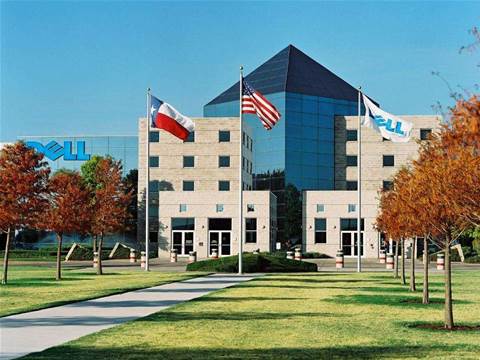
Cohen did not cite any manufacturer by name, but Lionel Menchaca, Dell's chief blogger, has issued a rebuttal of the claims, but has not provided any data of his own.
"The 20 to 30 per cent failure and return rates cited by Avian Securities do not even vaguely resemble what is happening in our business," he wrote.
"Our global reliability data shows that SSD drives are equal to or better than [the] traditional hard disk drives we have shipped.
"Beyond that, return rates for SSDs are in line with our expectations for new technology and an order of magnitude better than rates reported in the press."
Menchaca pointed out that Cohen did not speak to Dell before writing the report, and claimed that Dell's own tests prove that SSD drives are much faster than platter drives.
SSDs have been dogged by rumours of reliability problems but almost all manufacturers now offer the technology, but at a very heavy price premium.
Dell's Latitude XT laptop with a 32GB SSDR hard drive costs £208 more than a 40GB platter drive version.
Dell denies solid-state drive faults
Got a news tip for our journalists? Share it with us anonymously here.

Add techpartner.news as your trusted source

Partner Content

Cisco’s AI Rally Kit delivers high performance AI without the engineering pain

Promoted Content
Kris Manché, Panel Expert at Index Brisbane

AI PCs shift from hype to revenue opportunity for partners
.jpg&h=142&w=230&c=1&s=1)
Building higher tier service offerings with cost-effective, proactive monitoring

MSPs have spent a decade telling clients to consolidate. Few take their own advice.





.jpg&h=237&w=349&c=1&s=1)