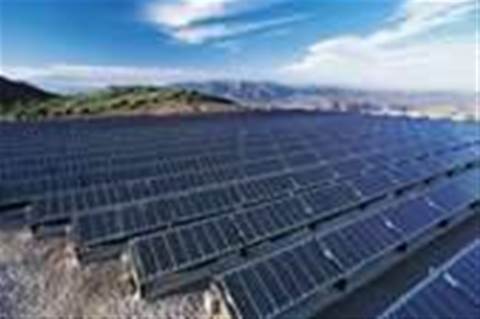
According to Sharp, the company is predicted to increase its solar cell production to 1.7 gigawatts by 2010, an increase of 990 megawatts. The hype around Green IT and increased investment by organisations in environmentally friendly technologies prompted Sharp to invest in its solar cell sector, claimed the vendor.
In a statement, Mikio Katayama, president and chief operating officer, Sharp Corporation said: “The market for solar cells is expected to expand rapidly. And as the number of large scale solar power generation systems around the world increases, it is said that solar power will become a staple of renewable energy in the future.”
Sharp stated the initiative will cost approximately US$72.5 million for the construction of a manufacturing facility in Sakai, Japan. Tentative figures predict the plant will boost annual production of solar cells to a scale of one gigawatt per year. The vendor also indicated additional expansion in solar cell production was on the cards.
“Sharp will dramatically improve production efficiency and be able to respond more efficiently to demand,” stated Katayama. “The Sakai plant will also serve as a model for thin-film solar cell plants to be developed around the world.”
Last year, Sharp scored a contract with Google to provide solar cells for its Mountain View campus. The panels produce approximately 1.6 megawatts of energy, which is equivalent to one-third of the total energy requirements of the campus, stated Google.
Green IT prompts Sharp to ramp up solar panel production
Got a news tip for our journalists? Share it with us anonymously here.

Add techpartner.news as your trusted source

Partner Content

Cybersecurity is a trusted advisory play for MSPs
.jpg&h=142&w=230&c=1&s=1)
Gamma invests to make Australian expansion a success
.jpg&h=142&w=230&c=1&s=1)
Frontier Accelerate for Azure: How ANZ partners can say yes to Azure and AI work without hiring a delivery team

In the memory market that AI just broke, here’s what you must do now

Now is the time for the channel to push the hardware refresh